
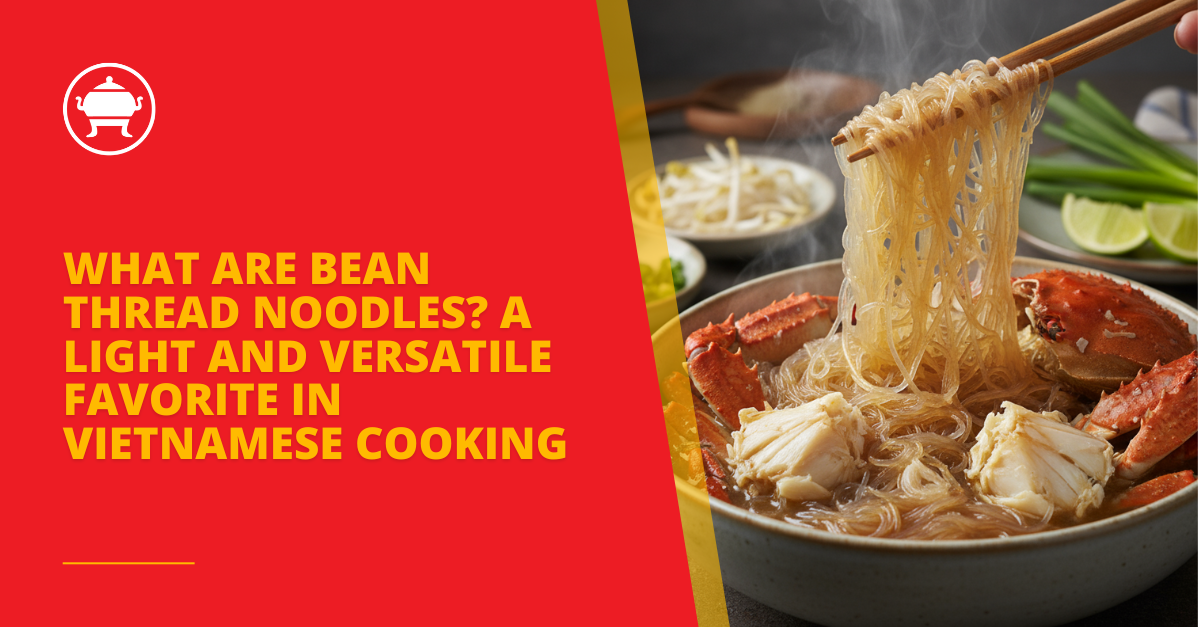
Light, translucent, and delightfully chewy, bean thread noodles are one of Vietnam’s most versatile ingredients. Also known as glass noodles or cellophane noodles, these delicate strands are made primarily from mung bean starch, giving them a unique texture that perfectly absorbs flavors from soups, stir-fries, and salads. They’re ideal for anyone seeking fresh, satisfying, and gluten-free meals that don’t feel heavy.
How Bean Thread Noodles Are Made
Unlike rice noodles, which are made from rice flour, bean thread noodles are crafted from mung bean starch mixed with water. When cooked, they turn beautifully transparent, earning them the nickname “glass noodles.” Their smooth texture makes them perfect for dishes that rely on soaking up sauces or broths, allowing every bite to deliver full flavor. If you love discovering the ingredients that define authentic Vietnamese cooking, explore Vifon’s full line of noodles to find your next favorite.
If you’d like to get the exact product we use in our recipes, check out VIFON’s Dried Bean Thread (Glass Noodle)
For additional inspiration using traditional Vietnamese ingredients, take a look at our blog post on Bottled Condensed Milk — A Sweet Touch to Vietnamese Coffee and Desserts.
Bean Thread Noodles vs. Rice Noodles
At first glance, bean thread and rice noodles might seem similar, but their characteristics differ in subtle and delicious ways. Rice noodles are opaque and soft, commonly used in pho or pad thai, while bean thread noodles are clear and slightly springy. They don’t break apart easily and are often used in lighter dishes like gỏi cuốn (spring rolls) or miến gà (Vietnamese glass noodle soup).
Popular Vietnamese Dishes That Highlight Bean Thread Noodles
Bean thread noodles are beloved for their adaptability. You’ll find them in countless Vietnamese dishes, from savory soups to vibrant salads. One favorite is Miến xào cua (stir-fried glass noodles with crab), where the noodles soak up the flavors of garlic, green onions, and tender crab meat. Another is Miến gà, a comforting chicken noodle soup often enjoyed during family gatherings. For those looking to recreate authentic meals at home, Vifon USA provides high-quality noodles and seasonings inspired by generations of Vietnamese culinary tradition. Beyond their culinary versatility, bean thread noodles are also a great choice for health-conscious eaters.
A Light and Nourishing Option
Naturally gluten-free, they are lower in calories compared to traditional pasta and provide a light base that pairs beautifully with vegetables and lean proteins. Whether enjoyed in a hot soup or a refreshing summer salad, these noodles bring nourishment without heaviness. To dive deeper into how Vietnamese cuisine embraces balance and wellness, explore this article from Vietnam Travel highlighting healthy, traditional dishes across the country.
A Symbol of Vietnamese Freshness and Balance
Bean thread noodles embody everything that makes Vietnamese cooking so special: freshness, balance, and creativity. Their subtle flavor and satisfying texture make them the perfect foundation for countless dishes, both traditional and modern. Whether you’re exploring new recipes or revisiting your favorite classics, these noodles are a delicious way to enjoy the lighter side of authentic Vietnamese cuisine.
To learn more about what “glass noodles” are, including their origins and typical uses across Asia, see the Wikipedia page on Glass noodles.0