
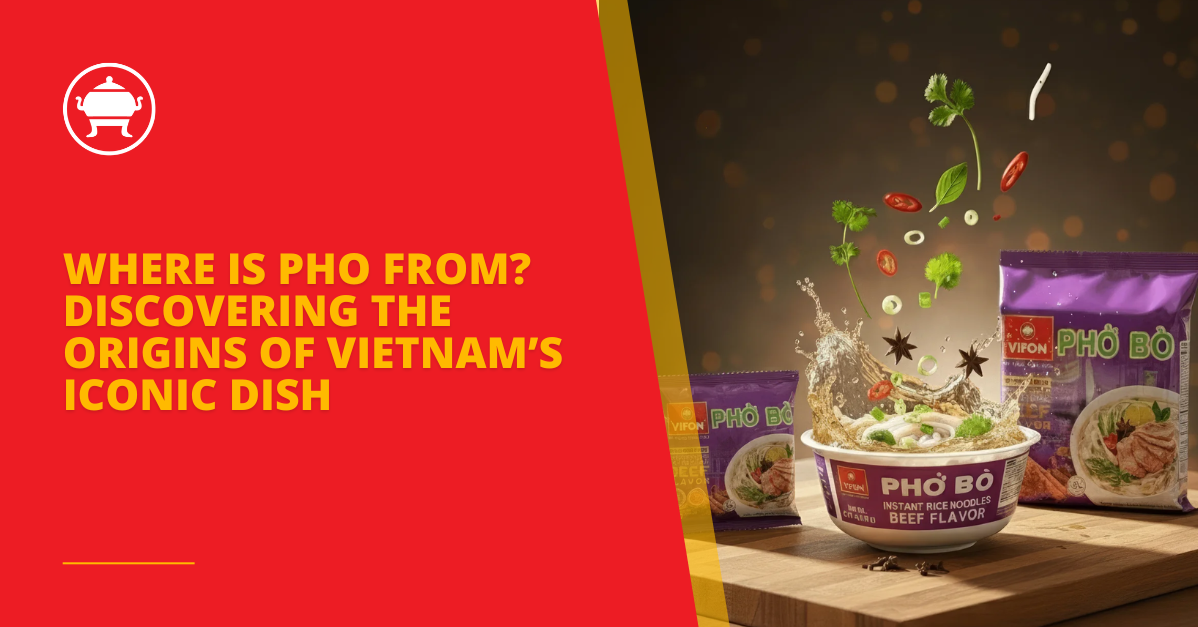
If you’ve ever enjoyed a warm, aromatic bowl of pho, you might have wondered: where is pho from? More than just a popular noodle soup, pho is deeply rooted in Vietnamese history and culture. Its story reflects a blend of tradition, resilience, and global influence, making it one of the most meaningful dishes in the world of cuisine.
Today, pho is enjoyed across the United States and beyond, but its origins trace back to a very specific place and time.
Pho’s Origins in Northern Vietnam
Pho is widely believed to have originated in Northern Vietnam, particularly in the region around Hanoi, in the early 20th century. At the time, street vendors would sell bowls of noodle soup made with simple ingredients, rice noodles, broth, and thin slices of beef.
These early versions of pho were humble and practical, designed to be affordable and nourishing. Over time, the dish became a staple of everyday life in Vietnam, especially as its flavors became more refined.
The Influence of French and Chinese Cooking
Pho’s development was shaped by a combination of cultural influences. During the period of French colonial rule in Vietnam, beef consumption became more common. This is why pho often features beef broth, a shift from earlier Vietnamese diets that relied more on pork.
At the same time, Chinese culinary traditions influenced noodle-making techniques and soup preparation. The use of rice noodles and slow-simmered broths reflects this shared history.
For readers interested in how global cuisines influence one another, the Smithsonian Magazine offers deeper insight into how dishes like pho evolve across cultures.
How Pho Evolved and Spread Globally
After Vietnam’s internal migrations and later global diaspora, pho began to spread beyond its northern roots. Southern Vietnam introduced variations with sweeter broth and more herbs, creating the version many people recognize today.
As Vietnamese communities settled abroad, pho traveled with them. In the United States, pho gained popularity in the 1980s and 1990s and has since become a mainstream favorite.
If you’re exploring how pho is enjoyed today or looking for inspiration, the Vifon blogs highlights different ways noodle soups have adapted to modern tastes.
A Staple of Vietnamese Identity
Despite its global reach, pho remains a powerful symbol of Vietnamese identity. It represents home, tradition, and comfort for many people. Whether served at a street stall in Hanoi or a restaurant in California, pho carries the same cultural meaning.
Today, brands like Vifon help bring Vietnamese-inspired noodle dishes to a wider audience, making it easier for people everywhere to experience these flavors.
Why Pho Still Matters Today
So, where is pho from? It began in Northern Vietnam, shaped by history and culture, and grew into a dish enjoyed worldwide. Its journey reflects more than just food, it tells a story of tradition, adaptation, and connection.
For food lovers in the U.S. and beyond, learning about pho’s origins adds a deeper appreciation to every bowl.